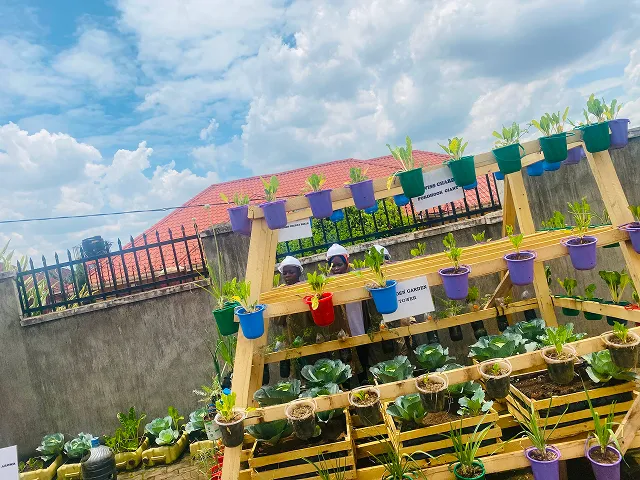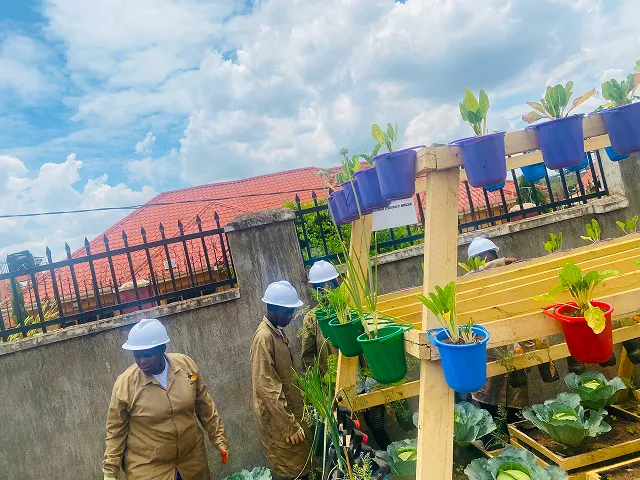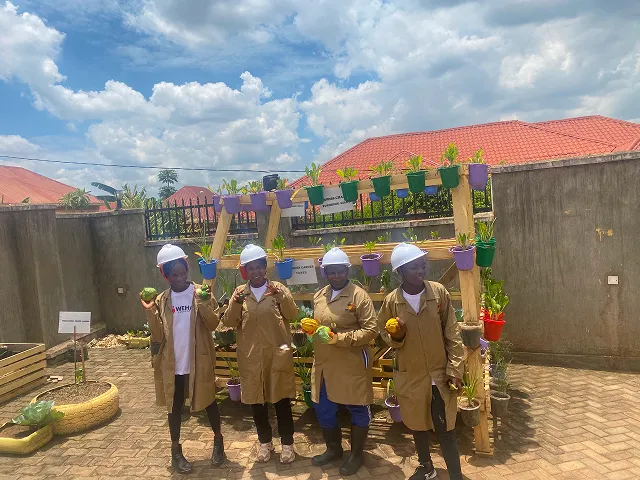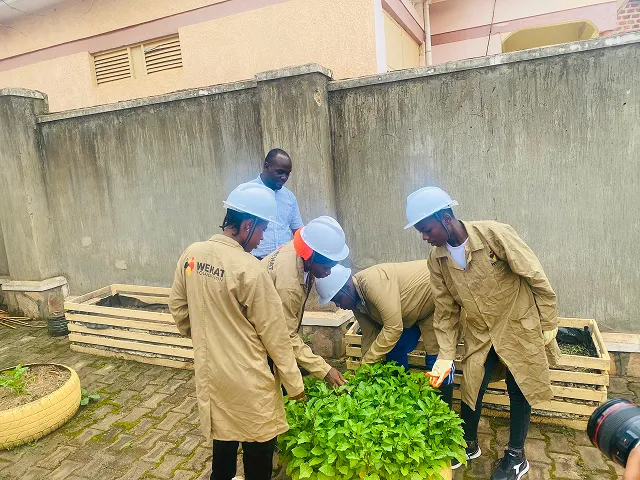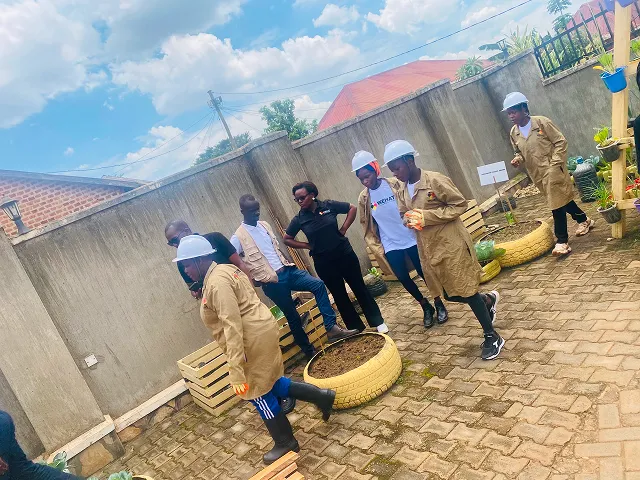
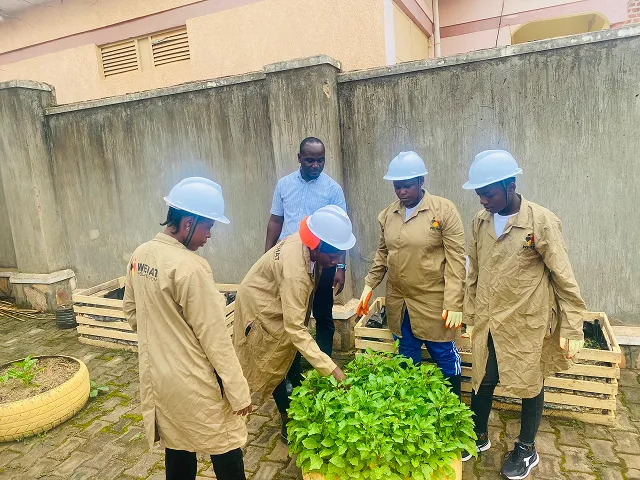
WEHAT Foundation is empowering girls in Kampala, Uganda through urban farming training in partnership with Afri-Fruits through the Girls in Action project
Girls In Action is being conducted in partnership with Afri-Fruits to enable the girls in underserved communities to grow their own food, breed their own domestic animals, and sell some of the proceeds to earn a living
We are tackling unemployment and economic disenfranchisement among young women in Uganda through capacity building in urban gardening with our project, Girls in Action. We kicked off the Girls in Action project in 2024 with a group of 20 girls between 5 and 23 years old. With this exciting project, WEHAT Foundation aims to promote food security, economic empowerment, foster community resilience, and environmental sustainability.
The project provides training on urban agricultural techniques suitable for small spaces covering various aspects, including soil preparation, crop nutrition, pest and disease management, pre-harvest and post-harvest handling, market identification, and marketing strategies.
Girls in Action focuses on teaching girls about cultivating vegetables such as lettuce, cabbage, tomatoes, onions, kale, spinach, potatoes, and bananas. Most of these crops mature within a short time (about 45 days from the date of transplanting), making them an ideal source of dependable and continuous income.
The project recognizes the potential of urban agriculture to be a significant source of employment. By equipping young women with agricultural skills and entrepreneurial knowledge, it creates income-generating opportunities by developing the agricultural value chain across the community.
To strengthen the sustainability of urban agriculture, the project aims to train community members to reach the necessary scale required by the market in Uganda. This involves raising seedlings as a food source and selling the surplus to generate income.
The project also promotes water conservation and management. Beneficiaries are taught techniques such as harvesting and reusing runoff from roadsides, using natural filters in vegetation for water purification, and establishing water reservoirs to collect rainwater.
Beneficiaries of the Girls in Action project also have an opportunity to engage in production, processing, distribution, and marketing their own produce, reducing dependency on external sources of income and contributing to economic development.
By providing comprehensive capacity building, promoting food security, and fostering economic empowerment among young women, this initiative is unlocking opportunities, building resilience, and creating a lasting positive change in the community.